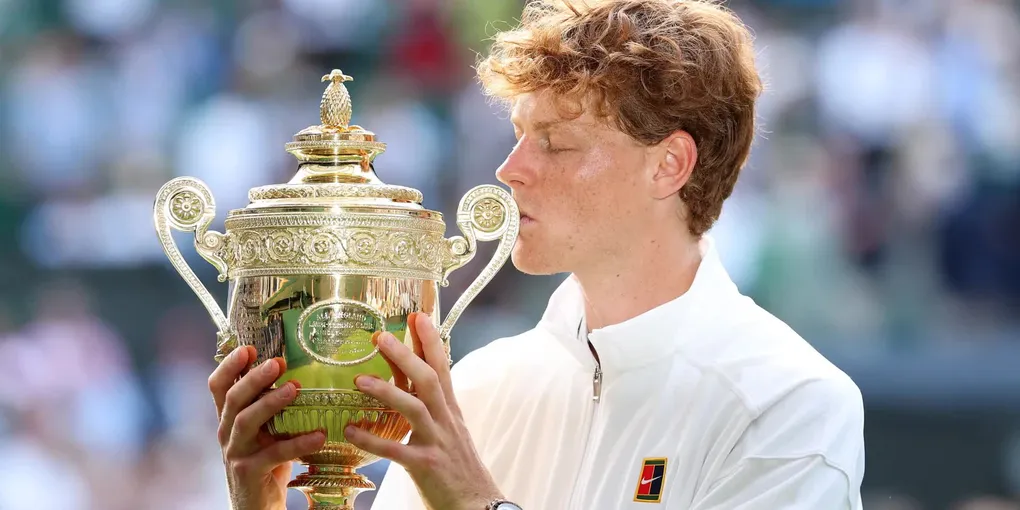
The Rise of Jannik Sinner
In the modern era of professional tennis, few players have undergone a transformation as rapid or as profound as Jannik Sinner. Once viewed as a highly talented prospect with a powerful baseline game, Sinner has evolved into a complete, tactical, and mentally unshakable force capable of dismantling the greatest legends of the game. His journey from the quiet mountains of San Candido to the bright lights of the ATP Finals is a masterclass in discipline, technical refinement, and psychological fortitude.
The Roots of a Champion
Born in San Candido, in the South Tyrol region of Italy, Sinner’s upbringing played a crucial role in shaping his character. Growing up in a multilingual, alpine environment, he developed a stoic resilience often seen in athletes from high-altitude regions. While many tennis prodigies begin their journey at age three or four, Sinner’s primary passion was skiing.
This background in skiing is not merely a biographical footnote; it is foundational to his athletic identity. The balance, core strength, and ability to read terrain—essential for downhill skiing—translated seamlessly to the tennis court. It provided him with a unique sense of footwork and an ability to maintain stability even when forced into defensive, wide-stretching positions.
The Evolution of Playing Style: Power Meets Precision
To understand Sinner’s dominance, one must analyze the technical components of his game. For much of his early career, Sinner was categorized as a “ball striker.” His ability to take the ball early and redirect pace is among the best in the world.
1. The Forehand as a Weapon
Sinner’s forehand is a heavy, penetrating shot. Unlike players who rely solely on topspin to create safety, Sinner uses a flatter trajectory that skids through the court. This makes it incredibly difficult for opponents to time their returns, as the ball arrives with significant velocity and stays low.
2. Backhand Stability
While his forehand grabs headlines, his two-handed backhand is the bedrock of his game. It is remarkably stable under pressure, allowing him to absorb the heavy shots of players like Novak Djokovic or Carlos Alcaraz and transition from defense to offense in a single stroke.
3. Improved Serving and Net Play
Perhaps the most significant leap in Sinner’s game has been his service variety and net aggression. Early in his career, his serve was a reliable tool but lacked the “free points” necessary to dominate. Through rigorous coaching adjustments, he has increased his first-serve percentage and added more kick and slice, making him much harder to break.
The Mental Fortress
Tennis is often described as a lonely sport, a psychological battle fought in the silence of one’s own mind. Sinner possesses a “poker face” that has become his trademark. Whether he is facing a break point or celebrating a championship point, his outward demeanor remains remarkably composed.
This emotional regulation is a strategic advantage. By not displaying frustration, he denies his opponents the satisfaction of seeing him rattled. Conversely, by not displaying excessive euphoria, he avoids the common pit-fall of a sudden drop in intensity. This steady-state temperament allows him to maintain a high level of performance throughout grueling five-set matches.